

In my previous article, I argued that school districts have a unique standing to hold Big Tech accountable. At that time, many were waiting for a "proof of concept" in the courts. That proof arrived last week.
In my previous article, I argued that school districts have a unique standing to hold Big Tech accountable. At that time, many were waiting for a "proof of concept" in the courts.
That proof arrived last week.
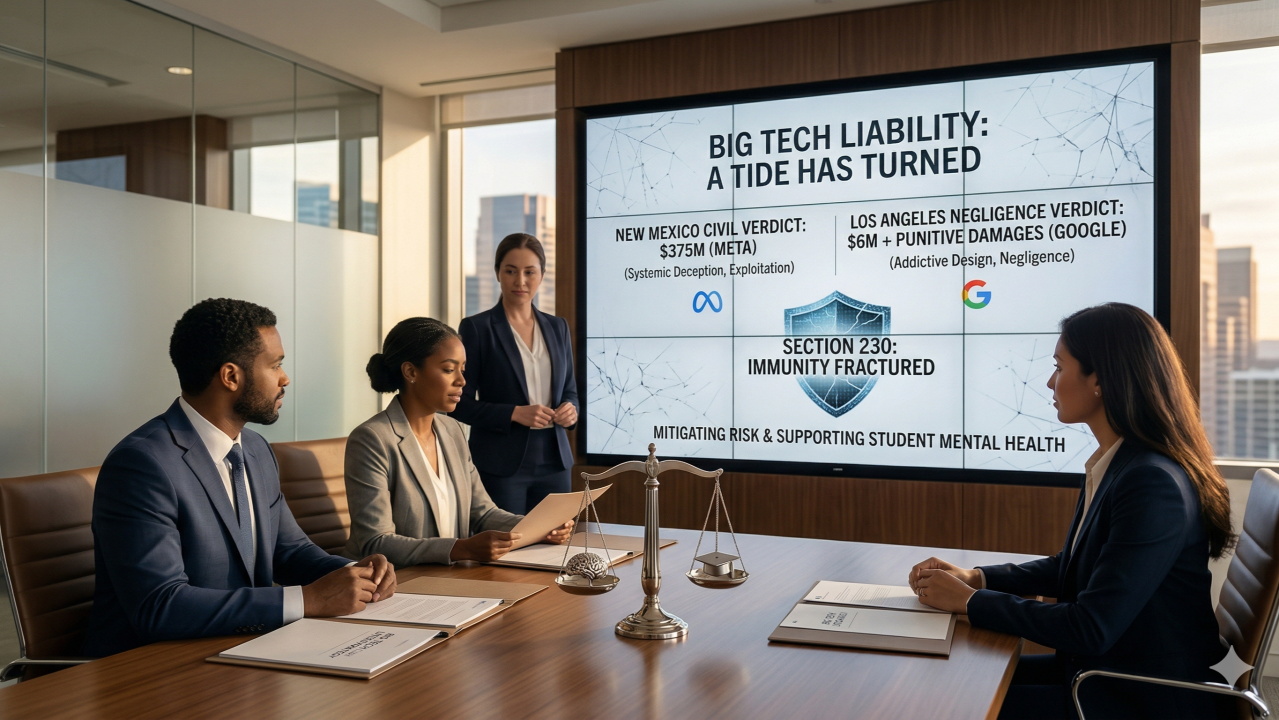
In the span of just 48 hours, two separate juries in New Mexico and California sent a clear message: Big Tech is no longer above the law. For school boards and administrators, these rulings aren’t just headlines—they are the legal green light to seek recovery for the mental health crisis currently straining school budgets.
1. New Mexico: A $375 Million Verdict for Systemic Deception
On March 24, 2026, a New Mexico jury ordered Meta to pay $375 million in civil penalties. The jury found that Meta willfully violated the state’s Unfair Practices Act by misleading parents about safety while engineering platforms that enabled child exploitation and grooming.
The takeaway for schools: The court found that Meta knew their products were dangerous, ignored their own internal warnings, and lied to the public. This establishes a "failure of duty" that every school district can now point to when justifying why they are suing to recover the costs of increased campus security and student safety programs.
2. Los Angeles: The "Design vs. Speech" Breakthrough
The following day, on March 25th, a Los Angeles jury found both Meta and Google (YouTube) negligent in a social media addiction trial, awarding $6 million in damages (including $3 million in punitive damages for "malice, oppression, or fraud").
For years, Tech Giants hid behind Section 230, claiming they weren't responsible for what users posted. In its verdict, the jury looked beyond the content and focused on the product design. Features like infinite scroll, autoplay, and persistent notifications were identified as defective "hooks" engineered to addict children.
The takeaway for schools: This verdict proves that "addictive design" is a product defect, not a free speech issue. If your district is paying for extra counselors to manage the fallout of digital addiction, you are now legally empowered to argue that you are cleaning up a "defective product" mess.
From Victim to Creditor
For too long, school districts have acted as the safety net for Big Tech’s negative externalities. We have been the "victims" of these platforms, absorbing the costs of:
· The Mental Health Tax: Funding social workers to handle anxiety and depression caused by "engagement-first" algorithms.
· The Distraction Tax: Managing the cognitive decline and behavioral issues stemming from compulsive platform use.
· The Safety Tax: Dealing with the offline fallout of online harassment and exploitation.
The New Mexico and LA rulings shift the dynamic. Schools are no longer just victims; they are potential creditors. These cases prove that when a company designs a product that harms children, they are liable for the damages.
The era of "too big to sue" is over. With over 250 school districts already part of the consolidated litigation in California and thousands of families winning their day in court, the legal precedent is set.
If your district hasn't yet joined the movement to hold these companies financially responsible for the mental health resources they’ve made necessary, now is the time. The courts have provided the map; it is up to school leadership to follow it.


