

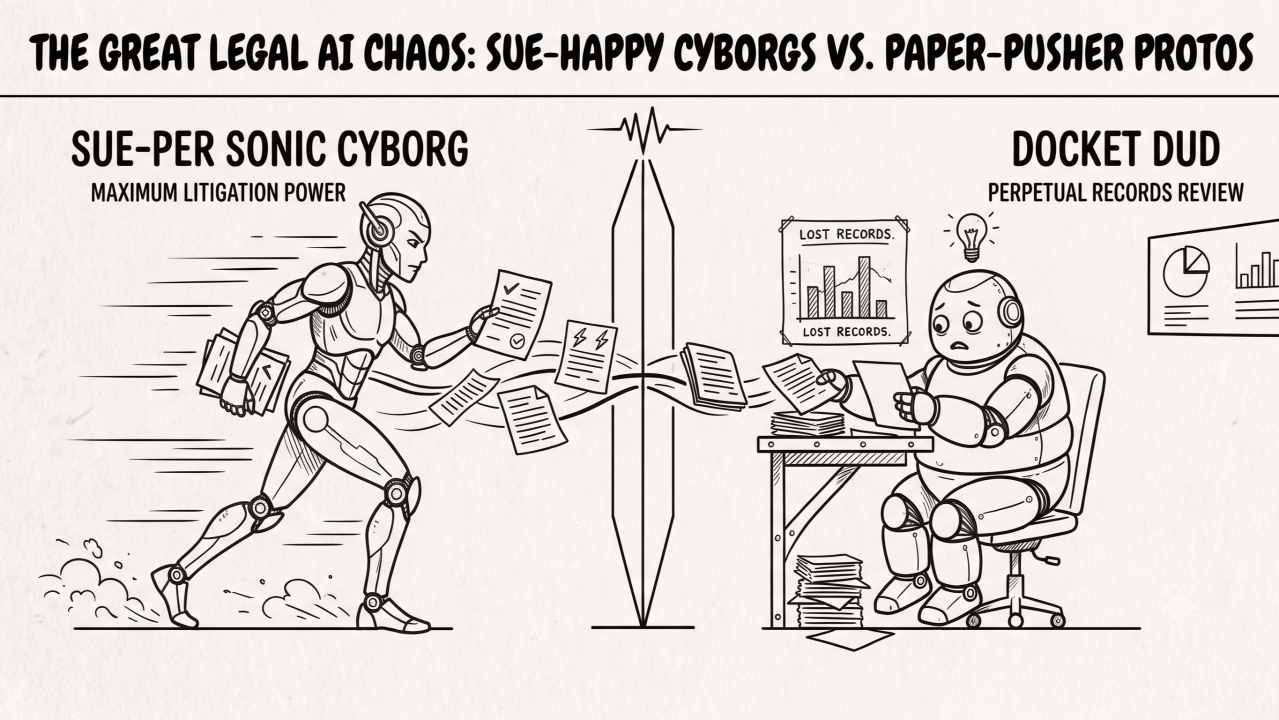
There is a quiet revolution happening across civil litigation. It isn't taking place in courtrooms or judicial chambers, but inside law firm operational workflows. It’s the Plaintiff AI vs. Defense AI arms race—and right now, plaintiff firms aren't just winning. They are running away with it.
There is a quiet revolution happening across civil litigation. It isn't taking place in courtrooms or judicial chambers, but inside law firm operational workflows. It’s the Plaintiff AI vs. Defense AI arms race—and right now, plaintiff firms aren't just winning. They are running away with it.
If you sit on the defense side of the docket or manage claims for an insurance carrier, you’ve likely felt the shift. Demand letters that used to take weeks to arrive are hitting your desk in days. They are longer, meticulously detailed, and backed by comprehensive medical chronologies, precise damage calculations, and clear policy-limit demands.
While corporate defense firms are still debating data privacy policies in 12-person innovation committees, plaintiff practices are using AI to scale revenues by 300% to 400% without adding headcount. How did plaintiff firms capture such a massive lead, and what must defense counsel and carriers do to level the playing field? Let's break it down.
Why Plaintiff Firms Are Winning the AI War
To understand why plaintiff firms are lapping defense firms in legal AI adoption, you have to look beyond the technology itself. The dynamic comes down to three structural advantages:
1. The Economic Model: Contingency vs. The Billable Hour
This is the elephant in the courtroom.
- Plaintiff firms operate on contingency. For a plaintiff lawyer, time is literally money. An AI tool that condenses a 20-hour medical record review into a 15-minute automated chronology doesn't reduce their revenue—it skyrockets their profit margins. Efficiency is pure upside.
- Defense firms traditionally operate on billable hours. An AI tool that cuts associate drafting time by 80% represents an immediate 80% loss in billable revenue on that task—unless the firm has already transitioned to fixed fees or value-based pricing.
2. Venture Capital Followed the Frictionless Workflow
Venture capital loves standardized, high-volume workflows. Plaintiff personal injury and employment practices share remarkably consistent pain points: intake screening, medical record collection, narrative demand generation, and settlement benchmarking.
Because the workflow is predictable across thousands of firms, legal tech founders and investors flooded the plaintiff market with billions in venture funding. AI platforms designed specifically for plaintiff law—like EvenUp and Eve—unlocked massive valuations by tackling these clear, repeatable pain points end-to-end.
Defense workflows, by contrast, are fragmented across bespoke corporate requirements, carrier billing guidelines, and varied industry regulatory contexts, making software harder to standardize.
3. Agility Beats Committee Paralysis
A mid-sized plaintiff firm is typically run by one to three managing partners. If a new AI tool promises to double their demand letter output, the managing partner can buy it, deploy it, and train their staff over a weekend.
A defense firm or corporate legal department, however, must clear multiple hurdles:
- Risk management reviews
- Information security audits
- Equity partner buy-in
- Billing compliance guidelines
- Client-imposed bans on generative AI tools
By the time a defense firm finishes its third round of vendor risk assessment for a single pilot, the plaintiff firm across the aisle has already processed 500 cases through its AI pipeline.
Defense litigation desks are currently being flooded with hyper-detailed, AI-backed demand packages, and massive written discovery dumps in the opening stages of litigation. A single defense associate who used to evaluate five routine demands a week, or one or two meet and confer letters on discovery per month, is now facing dozens of exhaustive, data-rich filings and submissions—creating an unsustainable operational bottleneck on the defense side.
How the Defense Can Level the Playing Field
The defense isn't doomed to be a perpetual victim of plaintiff-side efficiency. However, catching up requires more than buying a generic legal research chatbot. It requires a fundamental rethink of defense operations, business models, and technology integration.
Here is the strategic playbook for defense firms and insurance carriers to close the gap (and one our firm deploys to best support our clients):
1. Shift from Pure Hourly Billing to Value-Based Pricing
Defense firms must decouple revenue from labor hours for routine tasks.
- The Solution: Transition routine defense workflows—such as initial case evaluations, answer filings, standard discovery requests, and basic deposition summaries—to fixed-fee models or retainer structures.
- Why it works: When defense firms capture the financial benefits of AI efficiency, they align their operational goals with their clients' desires for faster, lower-cost resolutions.
2. Move from Single-Case Analysis to Portfolio Intelligence
Where defense teams do hold a massive, untapped advantage over plaintiff firms is data depth across entire portfolios.
While a plaintiff firm looks at one claim at a time, an insurance carrier or corporate defense department manages thousands of similar claims across jurisdictions. Defense AI should be harnessed to analyze portfolio-wide trends:
- Judge & Jurisdiction Analytics: How does this specific venue value this injury profile?
- Plaintiff Firm Benchmarking: What is this specific plaintiff firm's true settlement threshold versus their opening demand?
- Exposure Modeling: What is the statistical probability of a defense verdict versus an out-of-sized damages award based on historical regional settlement data?
By shifting from reactive defense to data-driven portfolio management, defense teams can price risk accurately and settle valid claims early before litigation costs balloon.
3. Overcome Committee Paralysis with Dedicated Innovation Squads
Defense leadership must create empowered, fast-moving innovation squads:
- Give a small cross-functional team (comprising tech-savvy partners, IT security, and a risk officer) pre-approved authority to pilot enterprise-grade, privacy-compliant AI tools.
- Test specialized vertical defense platforms rather than relying solely on general-purpose AI models, which lack the domain specificity and citation rigor required for court filings.
- Set 30-day trial periods with strict KPIs (e.g., reduction in initial review time, accuracy of medical record extraction).
If a tool passes security standards and proves its value in a sandbox trial, roll it out—don't let it sit in committee review for six months.
The plaintiff bar did not win the initial phase of the legal AI war because their attorneys are more tech-literate; they won because their economic incentives and operational structures forced them to innovate faster.
The defense side can no longer afford to view AI as an optional efficiency experiment. As plaintiff AI tools become more sophisticated, the operational gap will only widen.
The defense playing field can be leveled, but only by firms and carriers willing to match software with software and rethink how legal value is priced and delivered.


